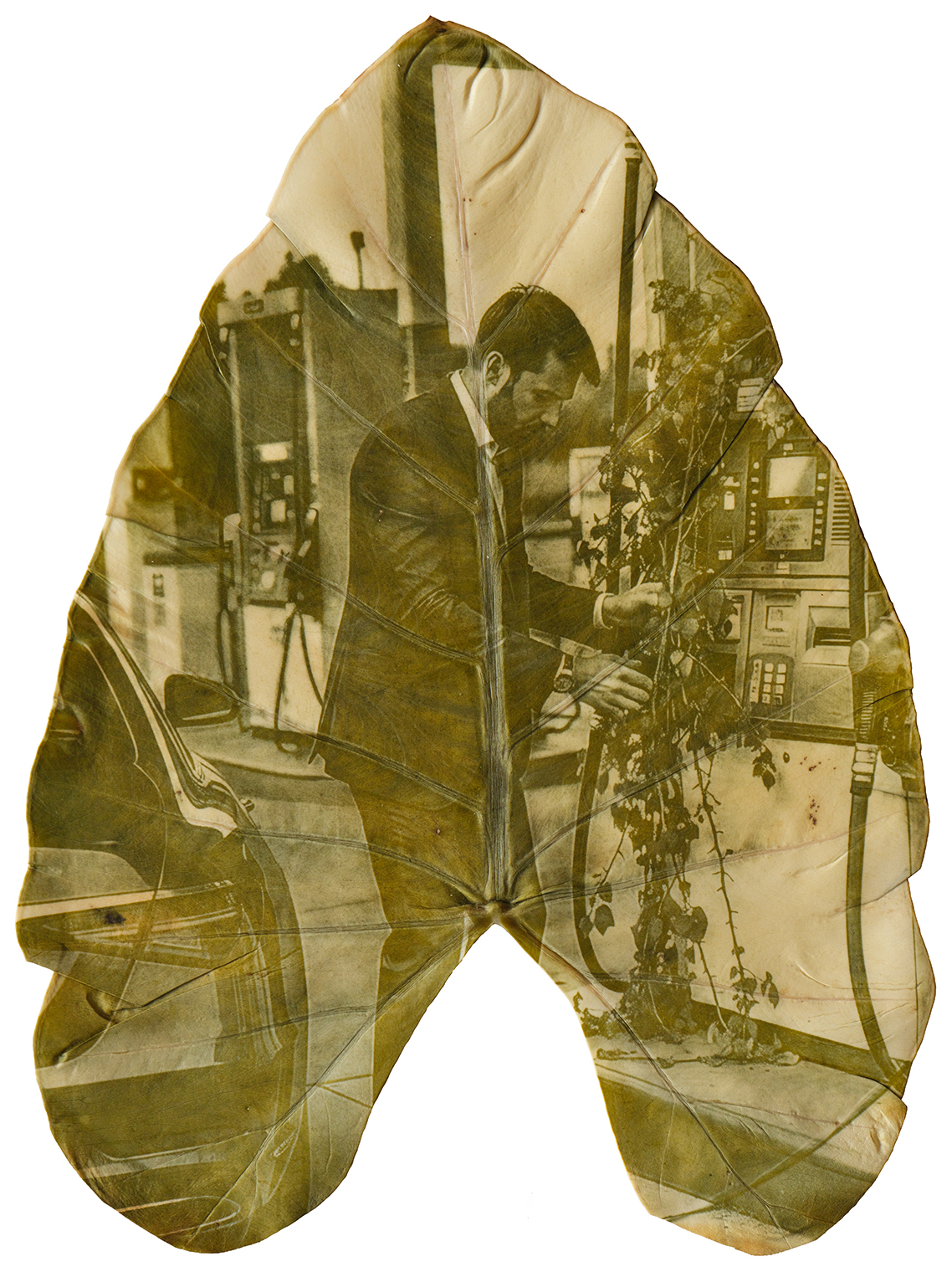
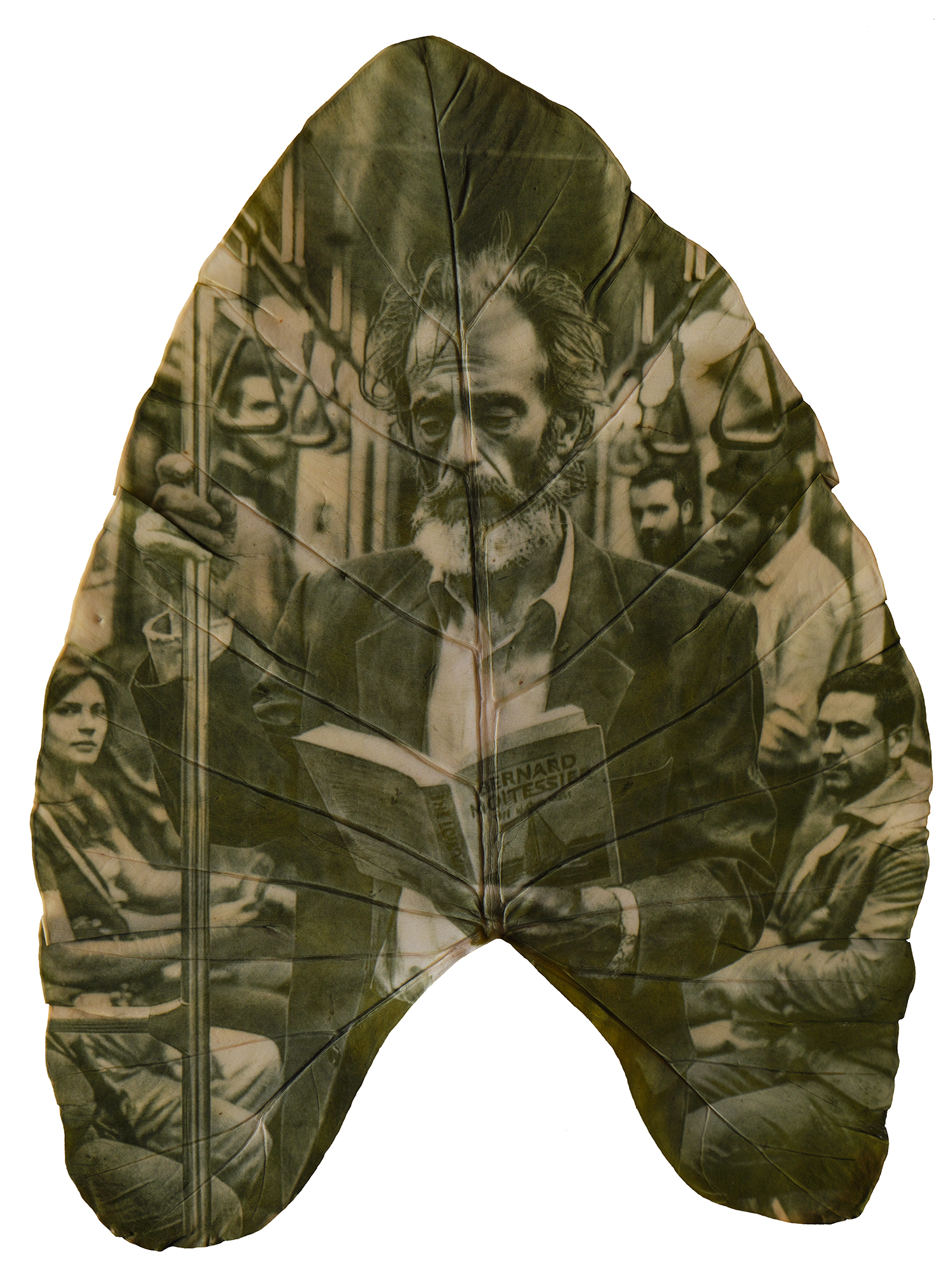
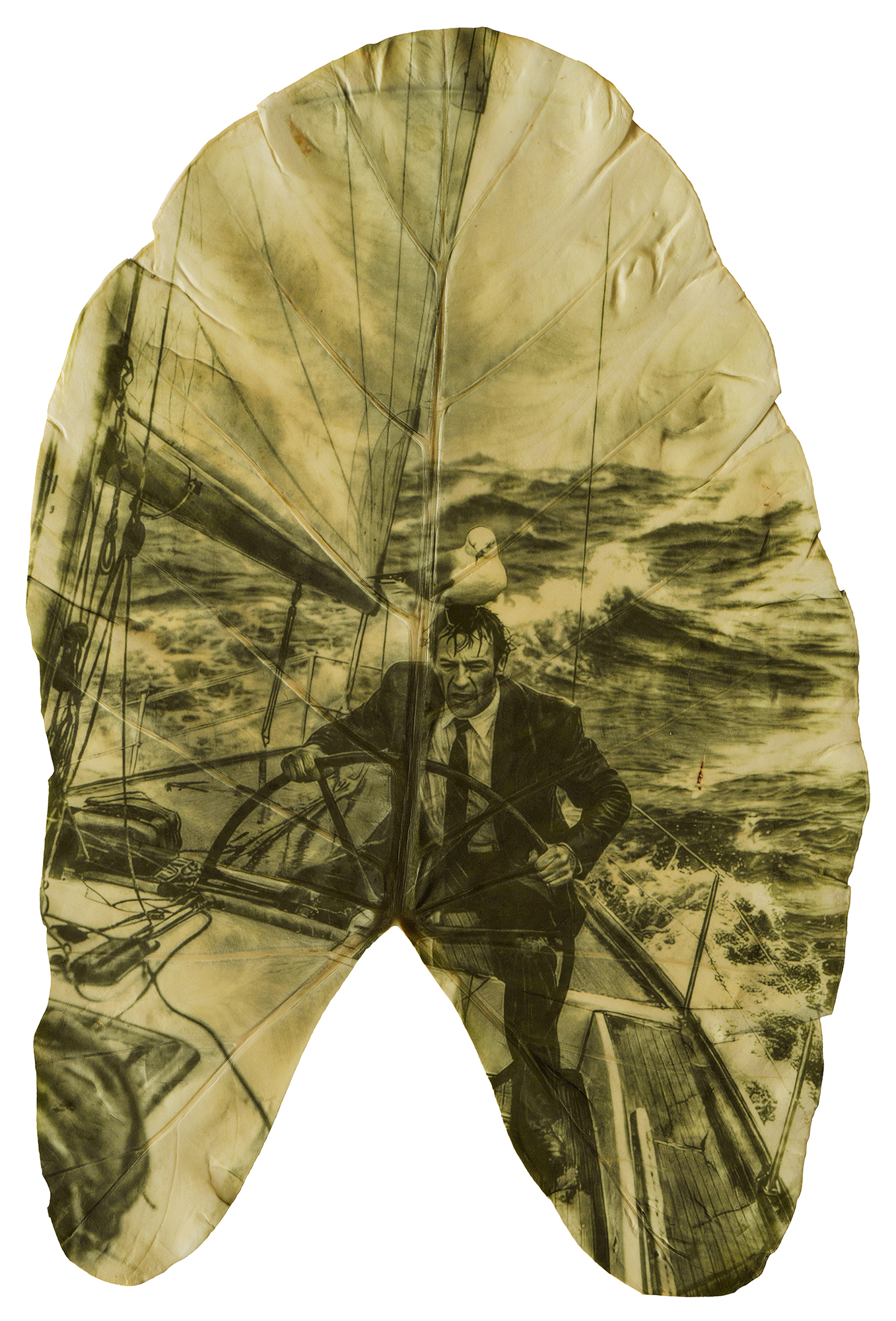
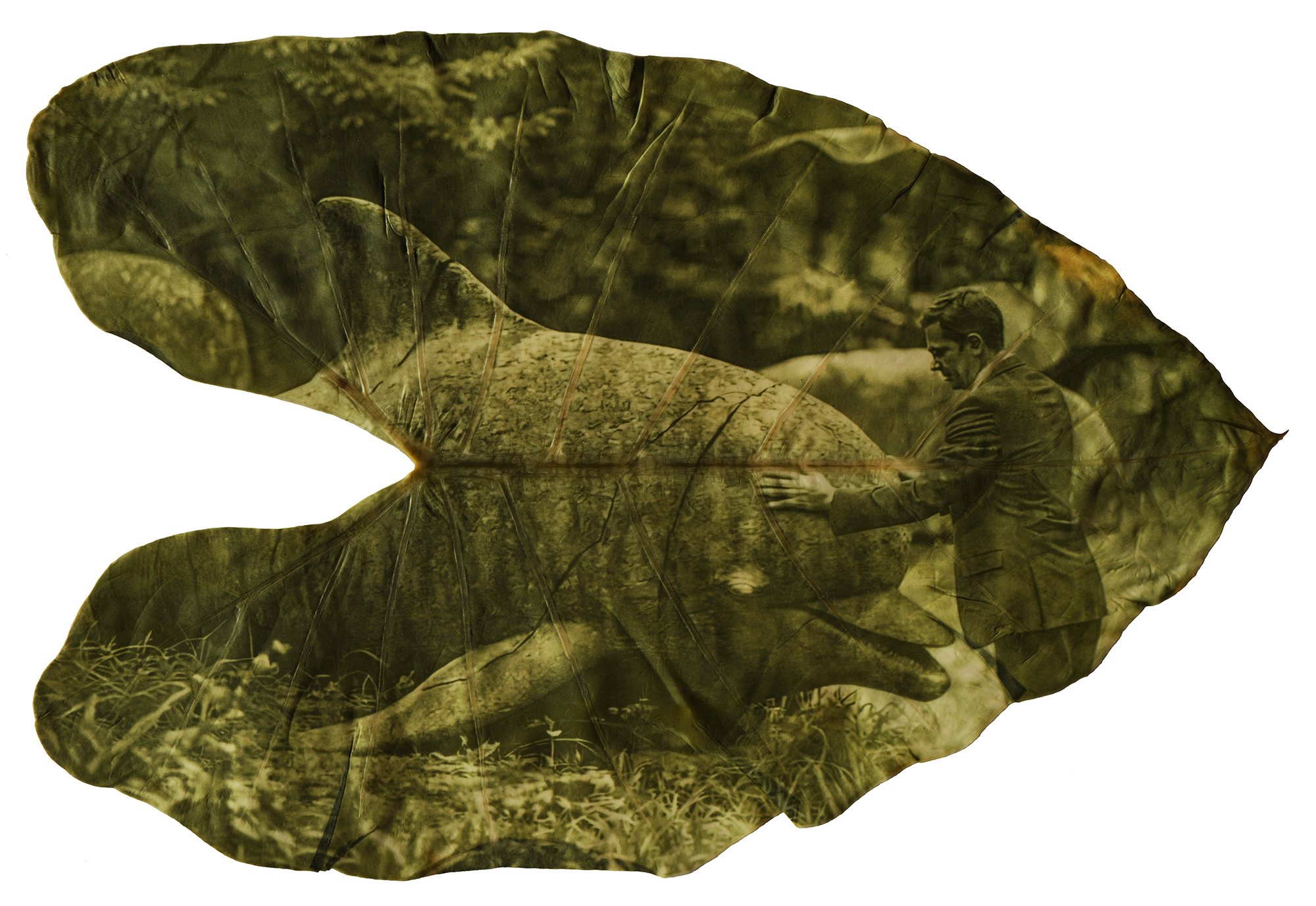
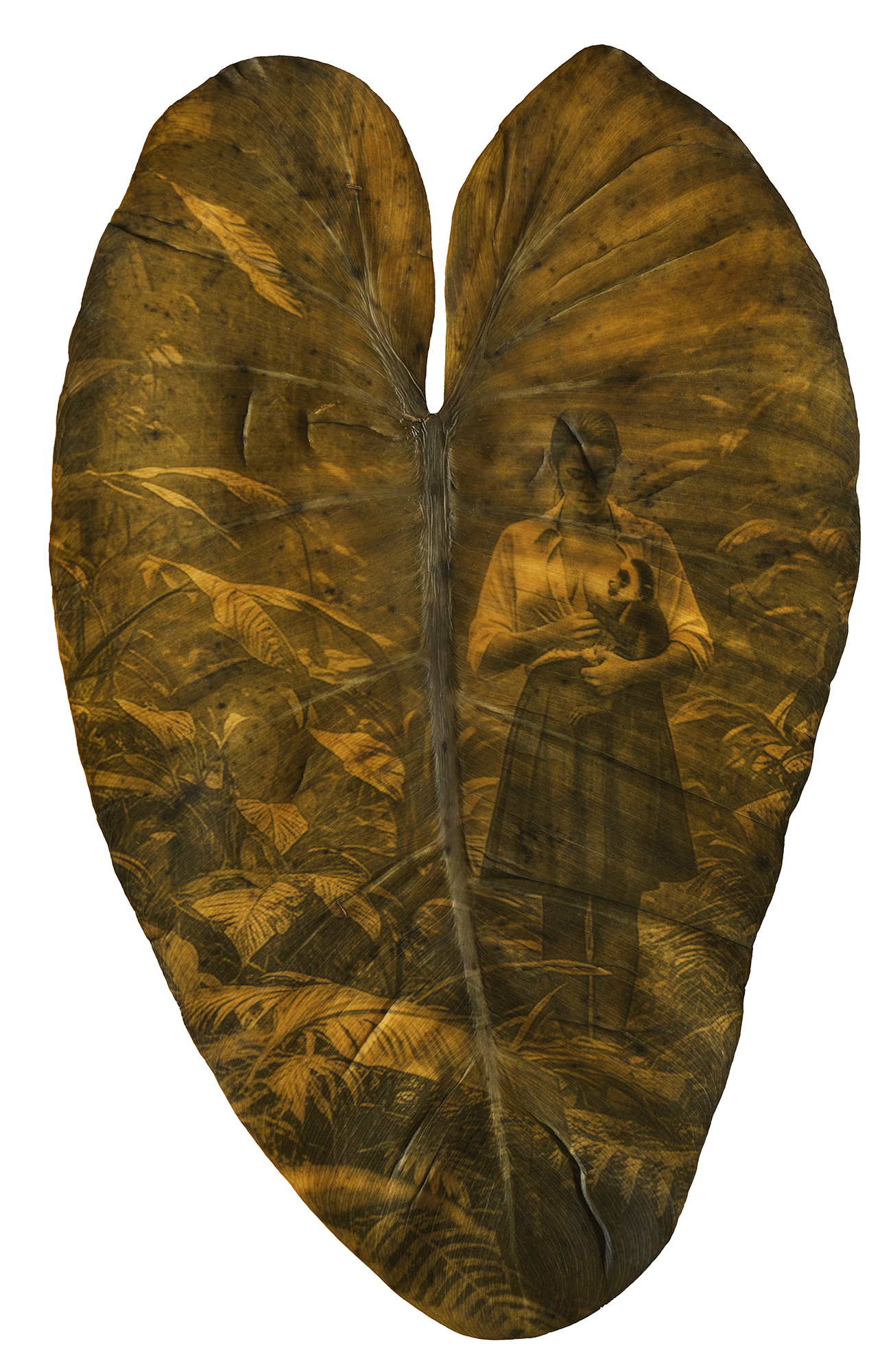
Fables, chlorophyll prints, various sizes, unique pieces / Fables, Phytotypes, dimensions variables, pièces uniques
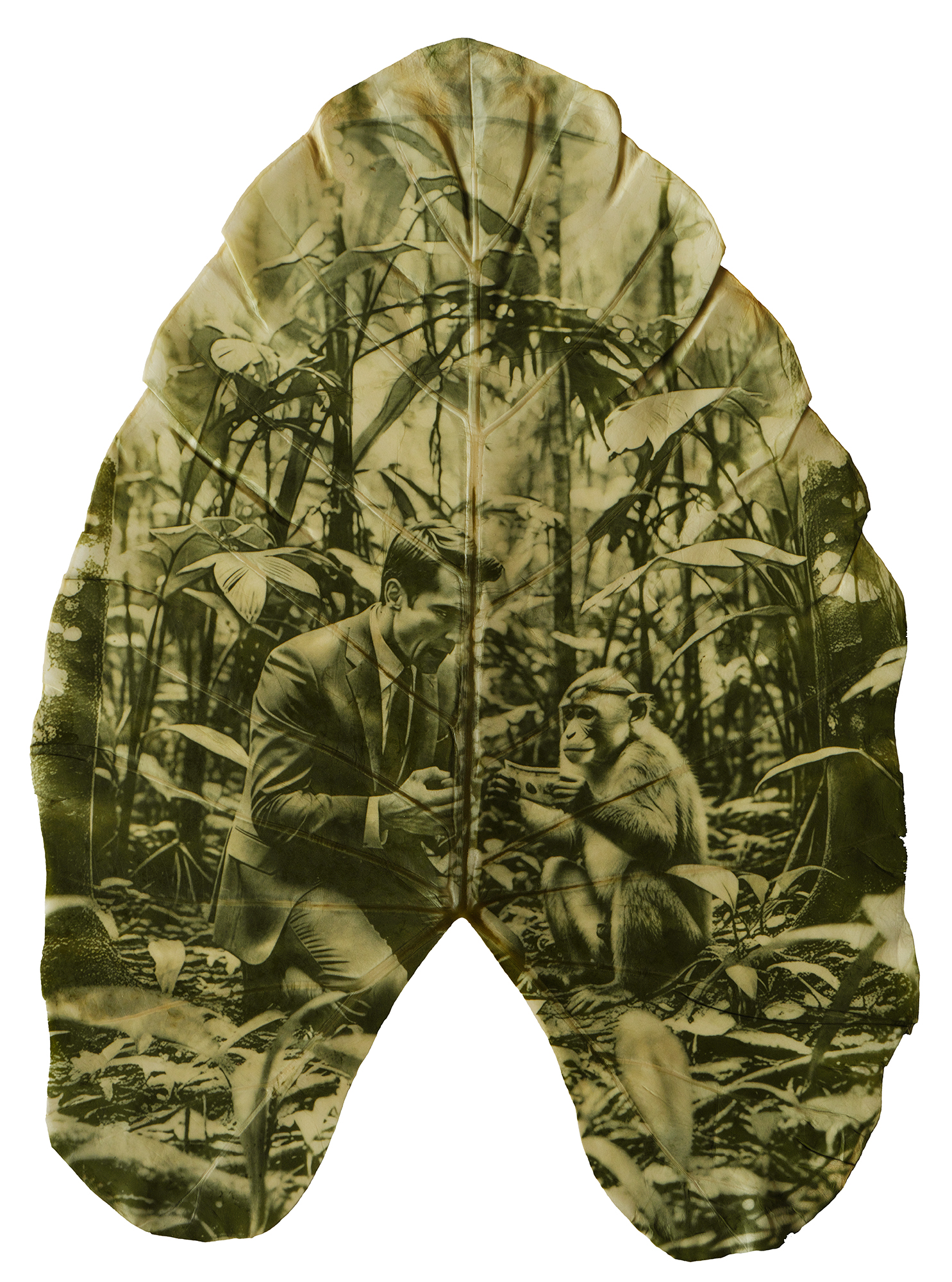
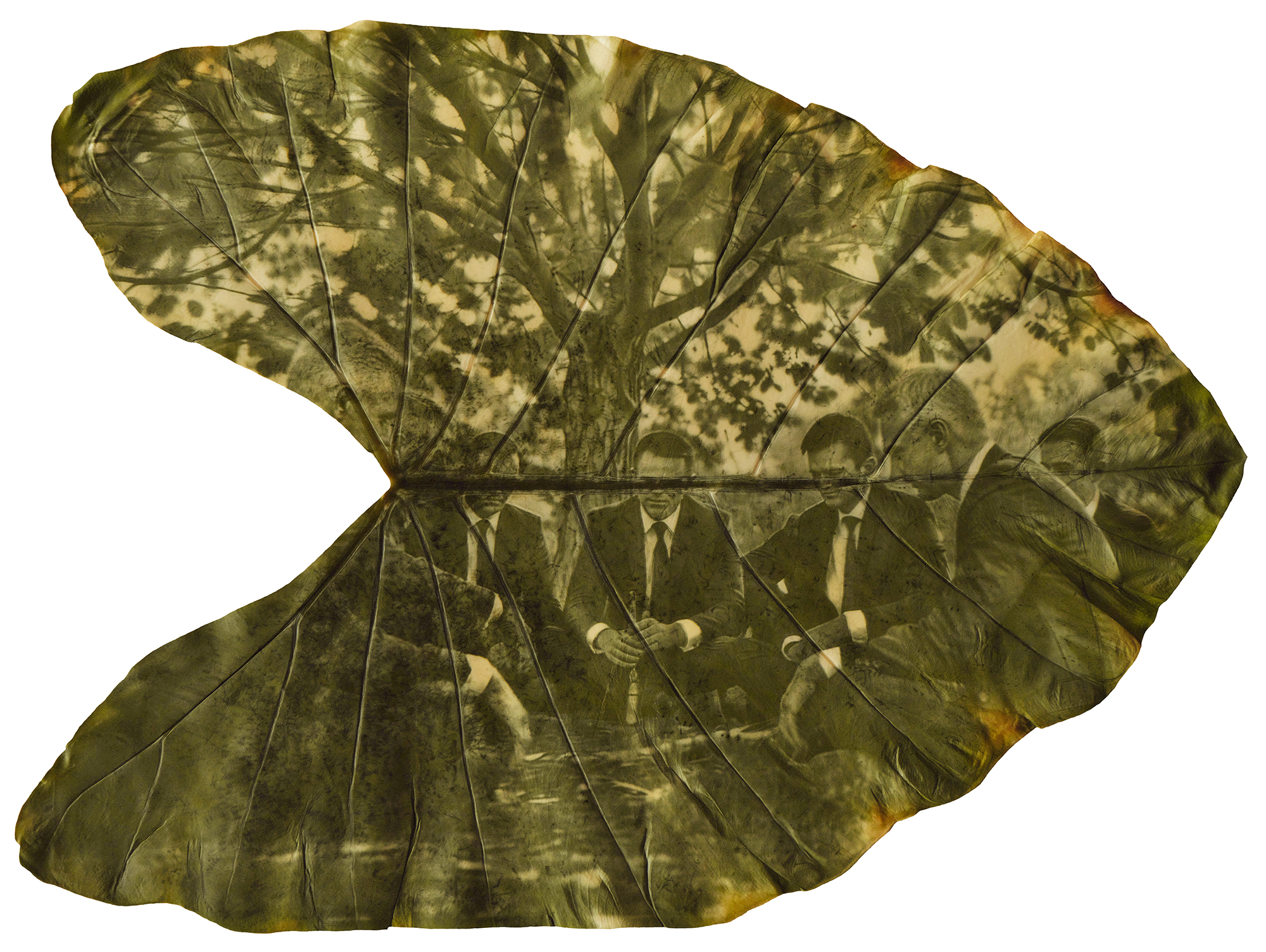
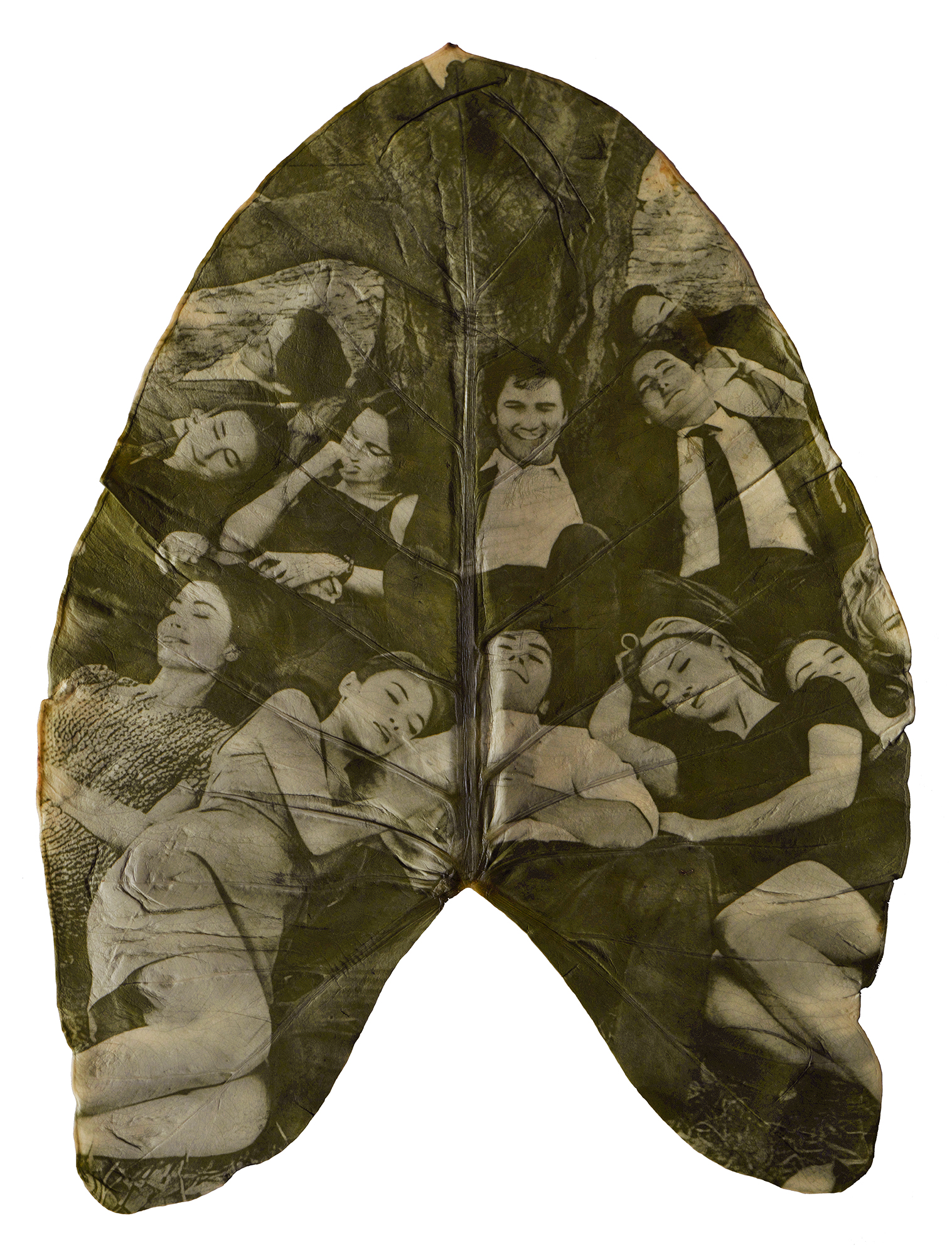
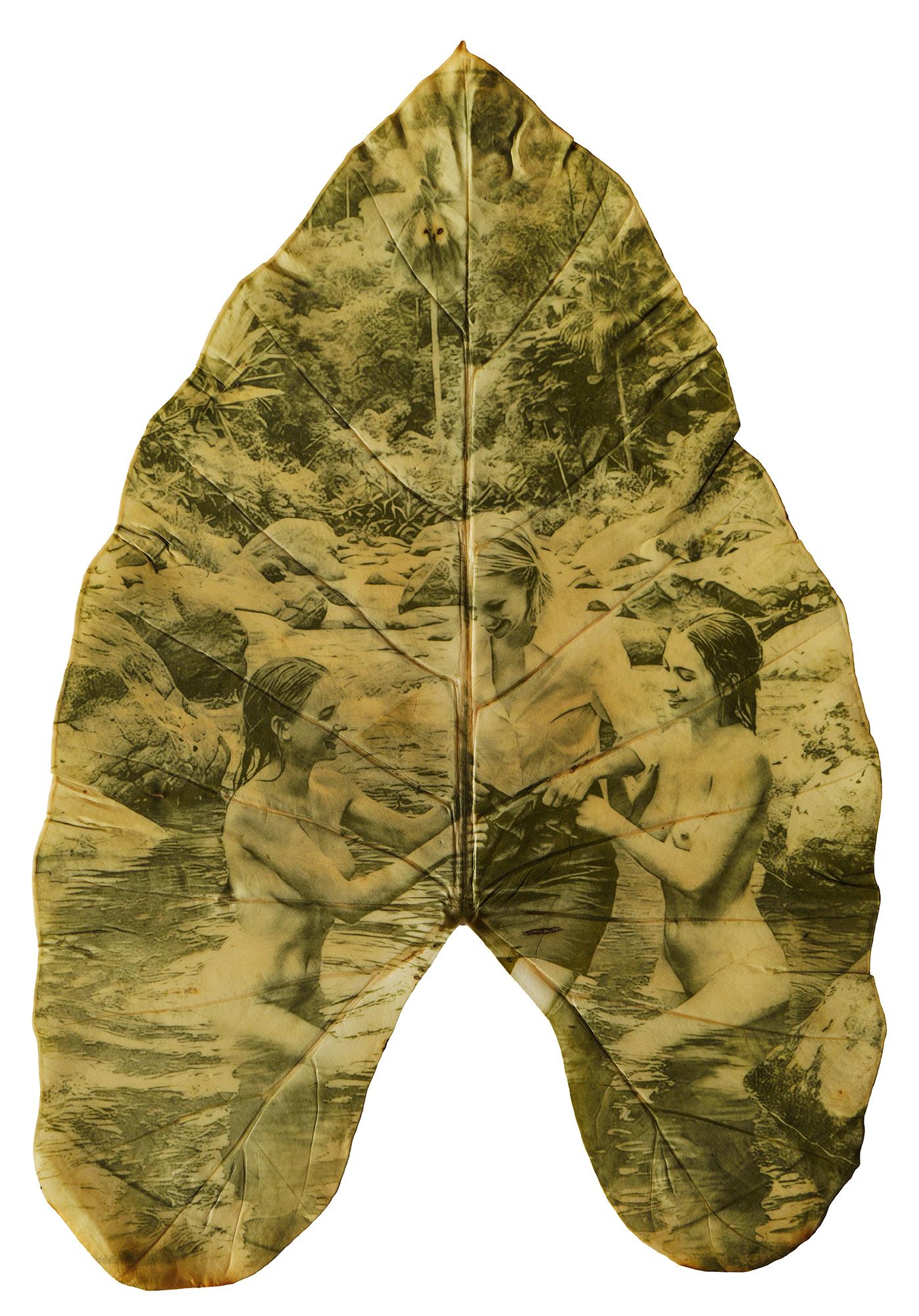
EN/ In my “Fables,” I portray individuals who seem to step outside their usual roles and routines to explore their relationships with plants, animals, and other human beings in a different way. These photorealistic images are generated in collaboration with artificial intelligence according to my vision, drawing on my experiences, research, and other narratives. Using the technique of chlorophyll print, I then develop these images on plants by exposing them to sunlight. They thus take shape through the combination of two development processes: the instantaneous, algorithmic process of AI, and the slow, organic process of chlorophyll. As hybrids, they highlight the complexity of reality and defy traditional categories, building a bridge between the birth of photography and the present day. To complete this process, I present my chlorophyll prints in frames, encased in bioresin, transforming them into enduring photographic objects that withstand the test of time and light. And echoing my subjects, I work aboard my sailboat, traveling in search of inspiration, sunshine, and chlorophyll. Aurélien David
FR/ Avec mes « Fables » je mets en scène des individus qui semblent s’extraire de leurs rôles et de leurs rythmes ordinaires, pour explorer d’une autre manière leurs relations avec les plantes, les animaux et les humains. Photoréalistes, les images sont générées en collaboration avec l’intelligence artificielle selon mes intentions, nourries par mes expériences, mes recherches et autres récits. Par la technique de la phytotypie, je révèle ensuite ces images sur des végétaux, en les exposant au soleil. Elles prennent ainsi corps par la combinaison de deux processus de développement : celui, instantané et algorithmique, de l’IA, et celui, lent et organique, de la chlorophylle. Hybrides, elles soulignent la complexité du réel et défient les catégories traditionnelles, édifiant un pont entre la naissance de la photographie, et aujourd’hui. Pour parachever ce processus, je présente dans des cadres mes phytotypes que j’enchâsse dans de la biorésine, qui deviennent ainsi des objets photographiques pérennes, à l’épreuve du temps et de la lumière. Et en écho à mes personnages, c’est à bord de mon voilier que je travaille, en voyage, en quête d’inspiration, de soleil et de chlorophylle. Aurélien David
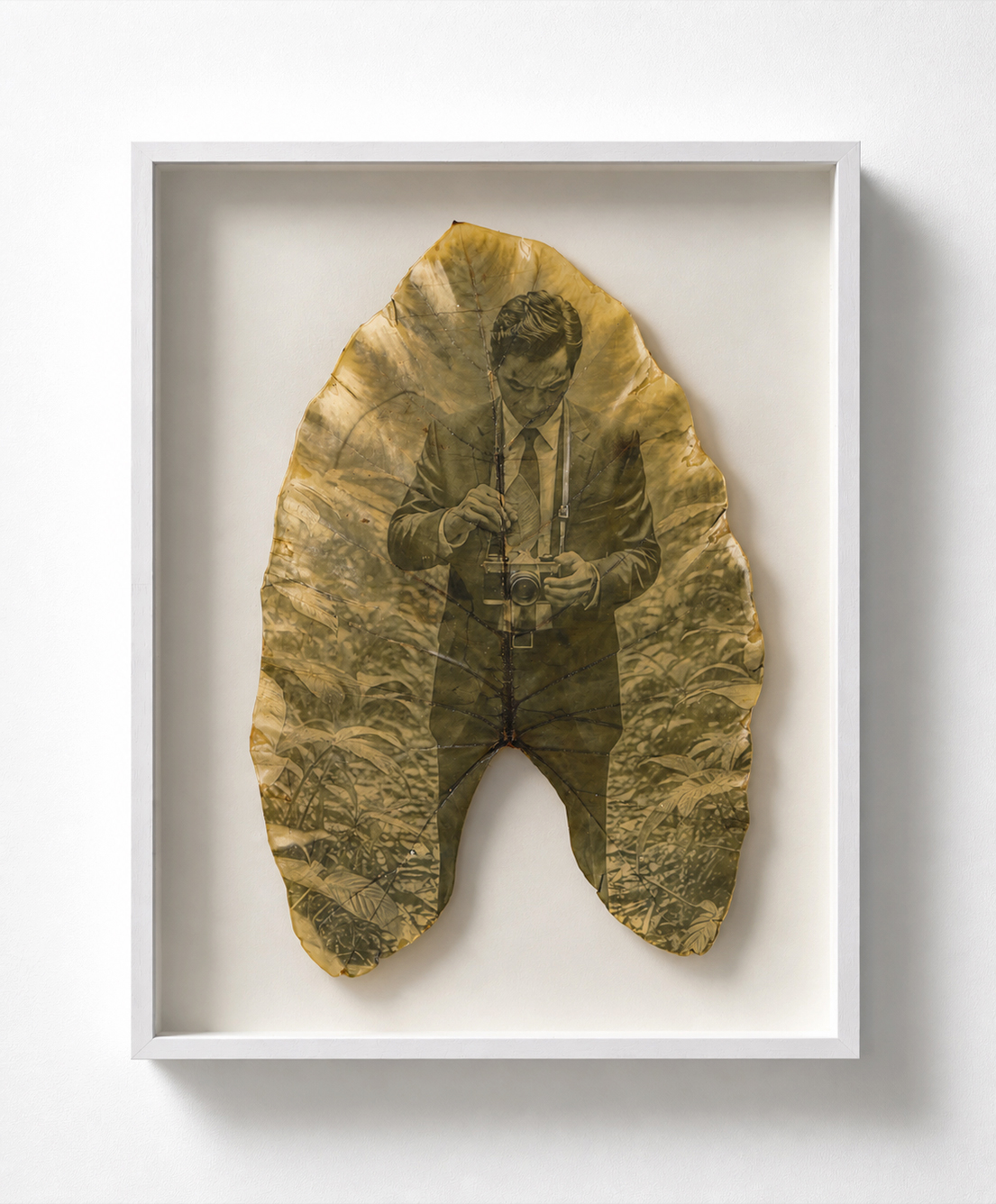
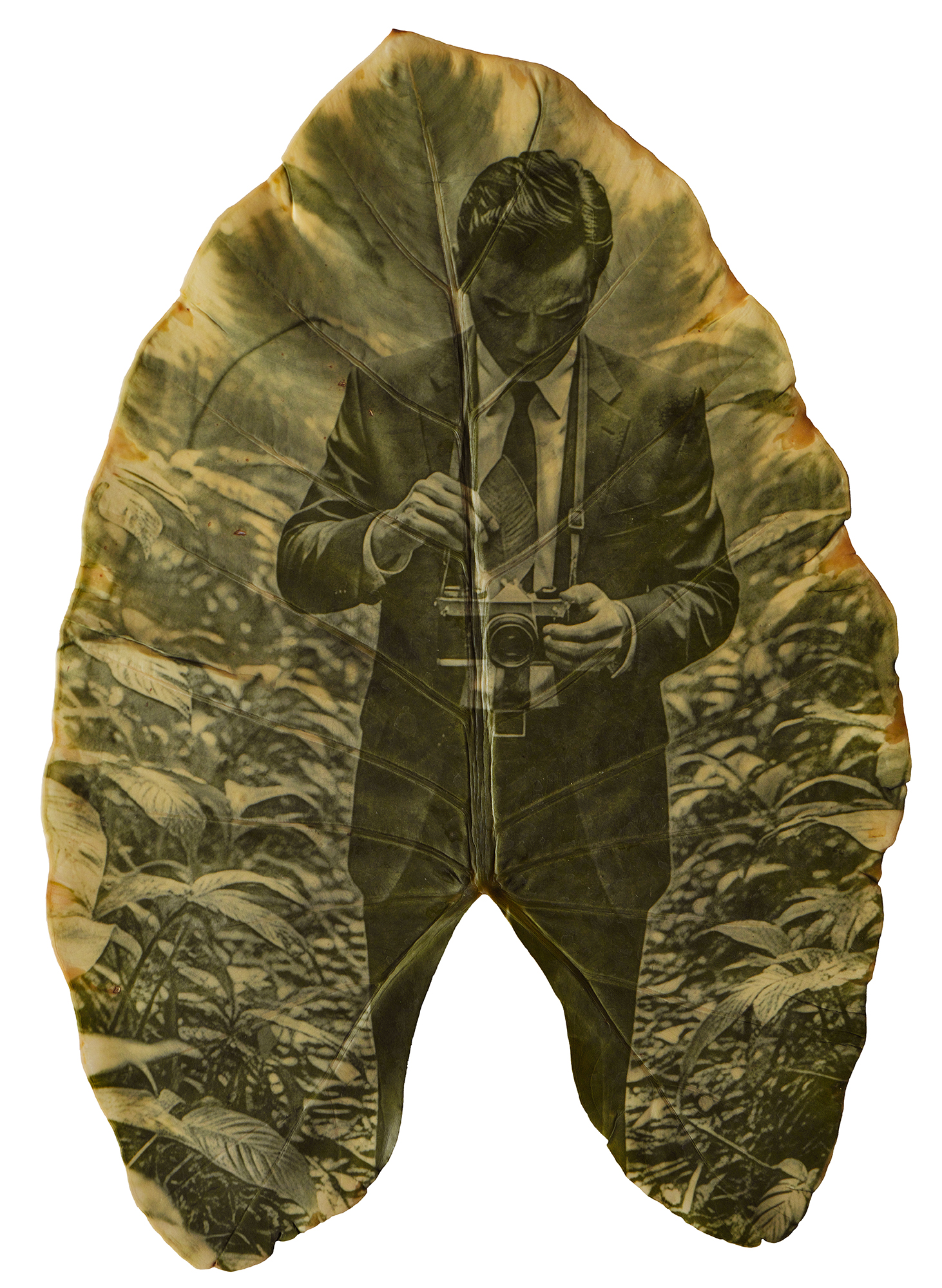
The chlorophyllian camera, 2026. Chlorophyll print on Alocasia leaf, 19,5x29cm / L’appareil photo chlorophyllien, 2026. Phytotype sur feuille d’Alocasia, 19,5x29cm